
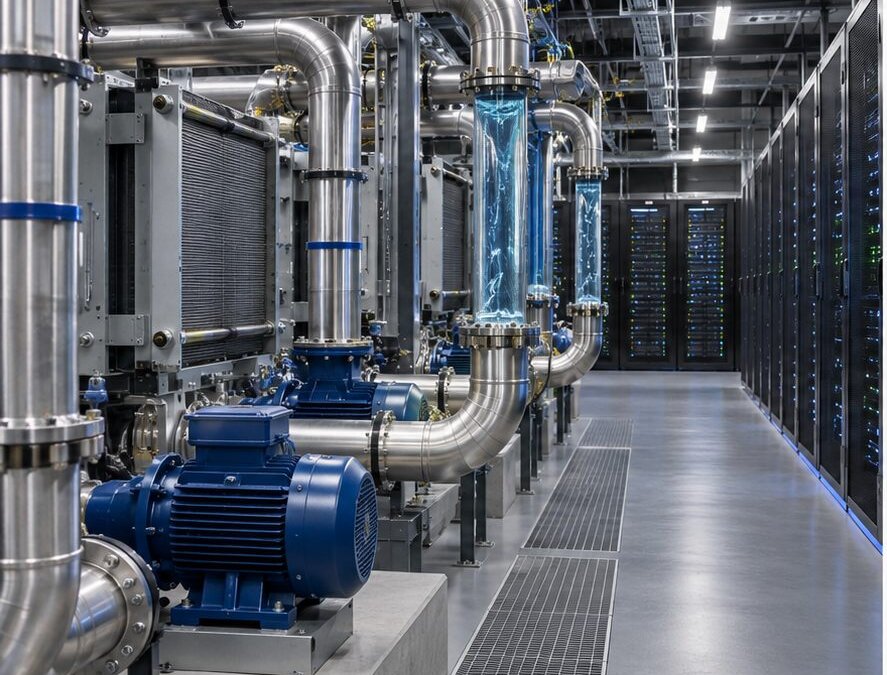
Data centers are often discussed in terms of electricity. But the growth of computing also raises a quieter question: where will the water come from?
Cooling systems can use water to carry heat away from equipment. The amount depends on the design, the weather and the way a facility operates. It also depends on the water used to generate the electricity that powers it.
Why Cooling Matters
Servers turn much of the electricity they consume into heat. That heat must be removed to keep equipment operating within its limits. Some facilities use evaporative cooling, while others rely more heavily on mechanical cooling or liquid systems that move heat away from equipment.
These approaches have different effects on water and electricity use. A system that saves water may require more electricity under certain conditions. A useful comparison has to consider the whole facility and its local environment.
Location Changes the Question
Water availability varies by region and season. A facility in a water-stressed area may face a different set of constraints from one in a wetter climate. Local communities, agriculture and ecosystems also depend on the same resources.
That makes early planning important. Developers need to understand the source and quality of water, the needs of other users and the conditions under which supplies may become constrained.
Measuring the Full Footprint
Water withdrawal and water consumption are related but distinct. Some water taken from a source is returned; water lost through evaporation is not immediately available for the same local use. Reporting both can help people understand the impact of a facility.
Indirect water use matters too. Electricity generation can require water, and that footprint varies with the source of power. A narrow measure of on-site use does not tell the whole story.
Better Choices Require Tradeoffs
Operators can explore recycled water, cooling designs suited to local conditions and more efficient use of computing capacity. Each option has costs and practical limits. The right answer depends on the facility and the community around it.
For Don Basile, the broader lesson is that digital growth rests on physical infrastructure. Planning for water alongside power can help make that growth more durable.