
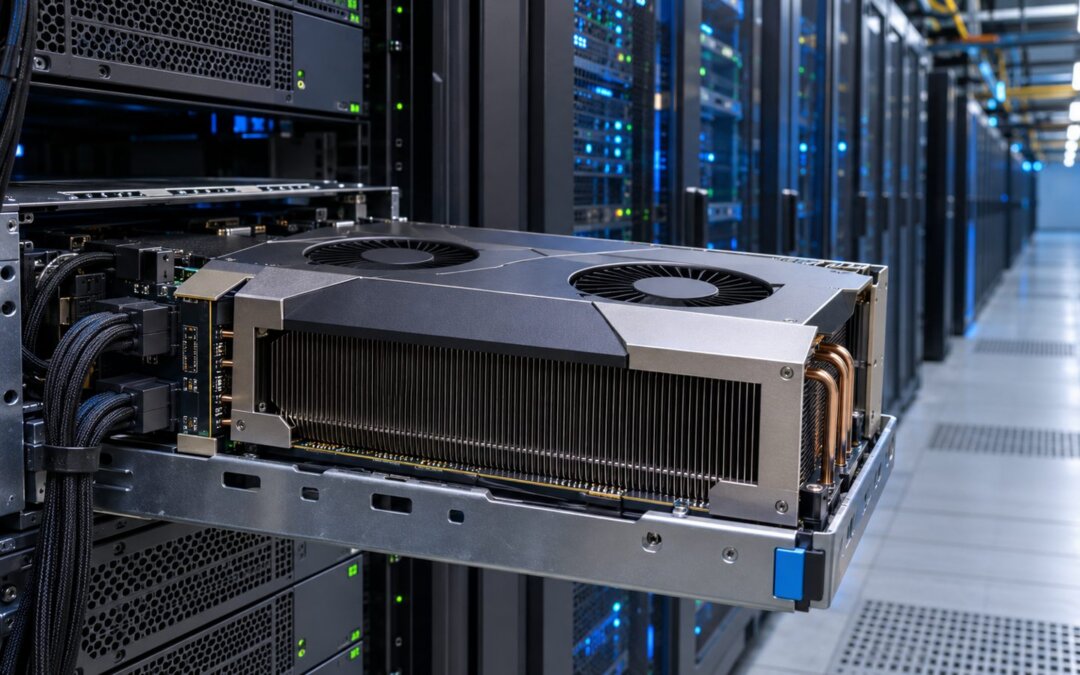
Artificial intelligence may appear to be a software story. People encounter it through applications that write, analyze information and answer questions. But behind those applications is a physical system of processors, networks, power and data centers.
For a business trying to develop or deploy AI, access to that system can affect much more than the technology budget. It can determine how quickly a team can experiment, how reliably it serves customers and how much flexibility it has when demand changes.
The chip has become an important part of that equation.
Access affects the pace of development
Training and running demanding AI models can require specialized processors. A team that must wait for suitable capacity may also have to wait to test an idea, compare models or bring a service into production.
Reliable access does not guarantee a useful product. It does give engineers more opportunity to run experiments and learn from the results. In a competitive market, the time between an idea and a working service can matter.
Access can come in several forms. A company might buy equipment, rent capacity from a cloud provider or use a specialized service. Each choice carries different commitments, costs and operational responsibilities.
The cost of capacity is more than the chip
Buying processors is only one part of building an AI system. The hardware needs power, cooling, networking, memory, storage and software. It also needs people who can operate the system and keep it secure.
Renting capacity can reduce the need to own that infrastructure, but customers still need to understand availability, pricing and performance. A low advertised price is less useful if capacity is difficult to obtain when a workload needs it.
Utilization matters as well. Expensive equipment that sits idle can become a burden. A business needs to match its computing commitments to workloads it can actually use.
Flexibility can be an advantage
AI workloads do not all have the same requirements. Training a model, adapting one for a particular task and serving responses to users may call for different combinations of computing and memory.
Companies that understand those differences can make better choices about where to spend. They may be able to use smaller models, schedule work at different times or combine providers. Access is valuable, but using capacity efficiently is just as important.
There is also a risk in relying on a single source of supply. Hardware, software tools and commercial agreements can make it difficult to move a workload. Businesses should understand those dependencies before they become urgent.
From hardware to business capability
The strategic value of AI chips comes from what a company can do with them. Capacity can support faster development, dependable services and new products. None of those outcomes follows automatically from owning or renting processors.
The businesses best positioned to benefit will connect their computing decisions to a clear purpose. They will know which workloads matter, what performance they need and how much flexibility they can afford. As Don Basile has written about technology infrastructure, the systems behind a service deserve as much attention as the application customers see.